Skip to content
Pl. I — The AI Department · Reykjavík · MMXXVI

You now have an AI department.

Software waits for instructions. Sókrates looks for friction.

Start the conversationarrow_forwardOne conversation. No deck.
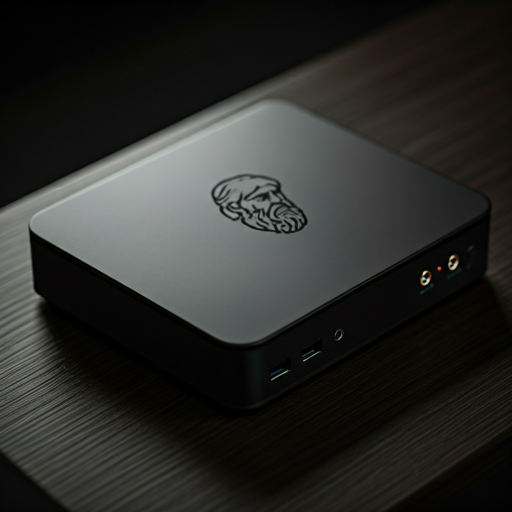
The Sókrates box — a matte-black mini-server with an etched philosopher emblem
Plate I · The Box001
§ II — The Numbers

Operational friction. What the substrate finds.

Every operator runs on rules nobody wrote down and questions nobody automated. A typical mid-market operation carries a backlog of recurring cross-system checks — a senior person stitching three or four systems together by hand, month after month. Sókrates makes the rules queryable and answers the questions with cited evidence.

i.
3–4
Systems stitchedCross-system checks by hand, month after month.
ii.
2
Checkpoints, not a calendarOperational acceptance, then a value review. Visible work in between, not a faraway launch date.
iii.
1
Operator, seniorThe person currently holding the integration in their head.
iv.
0%
On-premisesThe substrate runs on hardware you own. Your operational data stays in the building — on the Standard posture, controlled outbound exists for the model’s reasoning only, never for your rows; the Sovereign posture removes outbound entirely.
The territory
Plate II · The Territory002
On Hardware

The map is a function of the territory.

The cloud is someone else’s computer. Sókrates is yours.

Most tools copy your data into a separate system, then drift the moment your reality moves. Sókrates doesn’t. It reads what’s true right now, every time you ask. Nothing to reconcile. Nothing to sync.

Sókrates lives where you already work. In Slack. In Teams. In the channels we’ll soon meet you in.

§ III — The Onboarding

How the department gets installed. Stage by stage.

A deployment, not a pilot. The appliance arrives, the department reads your systems, answers come back with the work attached, and write-back turns on under your sign-off — action by action, trust as a function of evidence.

  1. 01.

    The box on your network

    The on-premises appliance is installed inside your firewall. The trust boundary is defined before anything intelligent moves. Hardware is customer-owned from day one.

  2. 02.

    Your maps, read

    You hand over maps of your systems. The department reads them and starts surfacing the recurring questions and the rules nobody wrote down.

  3. 03.

    Answers, with the work attached

    Sókrates answers questions across your systems with the work behind every answer attached. Read-only — nothing writes back yet.

  4. 04.

    Action under your sign-off

    Write-back turns on under your approval, action by action. Trust expands as a function of evidence, not as a function of weeks.

Built for cross-system operational work.

What recurs. · Sókrates, on what recurs across the fleet

Sókrates handles the recurring work that today routes through one senior person stitching three systems together.

01 · iFinance & close
02 · iiSupply chain & supplier reconciliation
03 · iiiShift planning & payroll
04 · ivRegulatory posture
§ IV — The Exit Policy

Clean exit. No hostage-taking.

The best retention strategy is making yourself easy to leave.

The appliance is yours if you bought it. Your operational data is yours. If you leave, Sókrates provides a portable Customer Custody Export — your source data, the operating map we built around it, the rules and checks we wrote for your operation, the work behind every answer, and the full history of who approved what. What stops is the managed Sókrates department: the people, the new skills the department learns, the model’s reasoning, fleet learning, updates, monitoring, and support.

i.
The Box
Appliance yours.
ii.
The Data
Always yours.
iii.
Custody Export
Portable & yours.
iv.
Freedom
No exit fees.

Before you ask.

Ten questions we get often, answered the same way we’d answer them on a call — in full sentences, with the operational shape underneath.

Q · 01

How is this different from just using ChatGPT?

ChatGPT answers from the words in the prompt. Sókrates answers from a connected map of the systems that actually run your operation — the ERP, the finance ledger, the supply chain, the spreadsheets nobody documented. Every answer carries the work behind it: the rows it used, the rules it applied, the dates, the deltas, who approved what. You see the conclusion and the work that produced it, not just the conclusion. The model is not the source of truth — the map is.

Q · 02

What happens if it gets something wrong?

It will, sometimes. That is why human approval is the default trust posture: nothing writes back into your systems without a current permission from the data owner. Every action carries a signed permission — who authorised it, on what evidence, against which rules — and that permission is part of the record itself, not a note bolted on afterwards. You can rewind any action to the rows it used and the operator who approved it, in a single query.

Q · 03

We’re already in an ERP migration. Can we even take this on?

The migration is the wedge, not the blocker. Sókrates maps both the system you’re leaving and the one you’re moving into onto the same connected structure, and answers the same operational questions against both — before, during, and after cutover. The rules nobody wrote down get captured once and survive the move, because they live inside Sókrates rather than inside either ERP. Mid-migration is when the operational picture is most fragile and the value of a parallel, system-agnostic answer surface is highest. Most pilots start during a migration, not despite one.

Q · 04

How does it pick up new tools we use?

When Sókrates needs a skill it doesn’t have yet — a new system to connect, a new check to run, a new rule to enforce — the department learns it and keeps it. The next time the same question comes up, the answer is already there. Bringing in a new tool is not a separate project; it is what the retainer is for. Your existing software is not touched — what changes is what the department knows how to do.

Q · 05

How do you onboard a new customer without rebuilding?

We don’t rebuild. Sókrates’s roster of skills compounds across the fleet: every system it has learned to read, every cross-system check it has built, every rule it has captured, is available to the next deployment. Each onboarding is the finite delta between your specific gaps and what the department already knows how to do — what you carry forward is Sókrates itself, what’s customer-specific is your operational shape on top of it. The hundredth deployment’s calendar is not the first deployment’s calendar.

Q · 06

Who has access to my data?

Your operational data — the rows, the records, the people — stays inside the box, always. The appliance sits on your premises, behind your firewall, and nothing identifying your operation leaves it without a current permission from your side. The two deployment postures differ in what happens to the model’s reasoning, not your data. Standard keeps controlled outbound for the model’s thinking only — never your rows, never your records, never anything that identifies your operation. Sovereign makes no outbound inference calls on request: nothing leaves the building, period. The model runs locally on the box. That is the posture we ship to banks, healthcare, and public-sector deployments where outbound traffic is non-negotiable. The two share the same software; Sovereign simply removes the outbound edge. Sovereignty is architectural, not a marketing claim.

Q · 07

What if we want to leave?

The retainer ends with 30 days’ notice. The hardware is yours if you bought it; your operational data is yours. Sókrates produces a portable Customer Custody Export — source-system extracts, the map of your operation as it stands, the rules and evidence generated against your business, and the full governance and approval history. What ends is the managed Sókrates department: proactive discovery, ongoing skill development, model access, fleet learning, updates, monitoring, and support. What’s yours stays yours. The Sókrates platform itself — the software that produced it — stays with us. That’s the deal. The best retention strategy is making yourself easy to leave; that means leaving with what is yours, not with the machinery that produced it.

Operations & hardware008010
Op · 01

What hardware do I get?

An inference-class on-premises appliance — a single physical machine sized for local model serving plus the data layer Sókrates runs on. It sits on your premises, behind your firewall, and it is customer-owned hardware from day one, procured separately from the retainer. The form factor is a rack-mountable server, not a desktop tower; deployment is a few hours with your IT, not a project.

Op · 02

What happens if the box breaks?

Sókrates coordinates the replacement. Where local spare stock exists, replacement is next business day; where it does not, the recovery posture is sized to match how critical that operation is to you. The customer’s job during a swap is to grant physical access; Sókrates is restored from snapshot onto the replacement hardware without manual reconfiguration. The connectors come up where they left off.

Op · 03

How long does integration take?

Deployment starts immediately, and the shape is two checkpoints, not a calendar. The first is operational acceptance: the box is live, the runtime is operational, the first connectors are reading, the trust boundary is approved. The second is the value review: live cross-system reconciliation, the first automations running under human approval, a governance baseline in place, and a quantified operational delta worth talking about. Between those two points Sókrates is doing visible work, not building toward a faraway launch date. The pacing is scoped in the engagement conversation, against your operation — not promised on this page.

§ V — The Question

Quiet Confidence We built the listener.

Sókrates is not a startup. It is a collective of systems engineers and philosophers based in Reykjavík.

The unexamined workflow is not worth automating.

AI should be invisible — quiet infrastructure that works for the company, not a distraction that forces the company to work for the tool.

HeadquartersKöllunarklettsvegi 1, 104 Reykjavík

The Architects

Hákon Freyr Gunnarsson001Pl. 001

Hákon Freyr Gunnarsson

Founder & CEO

Mathematician and AI researcher; founder and CEO of Sókrates, building AI systems that help people reason, decide, and execute with greater clarity. He works across product, software architecture, and applied AI, with a focus on turning complex ideas into practical tools. His work spans multi-agent systems, full-stack engineering, and knowledge workflows designed for real-world use. At Sókrates, he is focused on making intelligence more useful, transparent, and actionable.

Gunnlaugur Jónsson002Pl. 002

Gunnlaugur Jónsson

Chairman, Fjártækniklasinn / Finance & Strategy

In financial markets since 1997. Founded the Reykjavík FinTech Cluster. Managed investment firms Straumborg and Lindir Resources, co-founded Viska Digital Assets. Wrote Ábyrgðarkver on personal responsibility after the 2008 crash.

Dr. Ásgeir Theodór Jóhannesson003Pl. 003

Dr. Ásgeir Theodór Jóhannesson

CEO, Fjártækniklasinn / Legal Counsel

Philosopher and international lawyer. PhD on Kierkegaard (Southampton), dual LL.M.s with distinction (Vienna, Southampton), and admitted to the Icelandic Bar.

On our Sovereign deployment, nothing leaves the building — and that’s a legal guarantee, not a slogan.
Matthías Páll Gissurarson004Pl. 004

Matthías Páll Gissurarson

Principal Engineer, Language & Compilers

A specialist in functional programming and programming languages. He earned his PhD at Chalmers University of Technology, specializing in program synthesis and computer security, and has since worked as a consultant on projects across the United States and Europe. He sits on the steering committee of GHC — the Glasgow Haskell Compiler — and on the Haskell.org committee. He defines the language that turns rules into running systems.

§ VI — How We Charge

Four things to know before you ask.

The engagement is bespoke; the conversation does the scoping. The commercial shape, though, is the same every time — and worth knowing before you write.

01How is it priced?

The function being run, not seats, not tokens, not requests. The close cycle. The supplier reconciliation. The audit pack. The pipeline-quality report. You don’t pay your department more because it had a productive month.

02What’s included?

A single all-in monthly retainer — the running of the department, the model’s reasoning, the new skills it learns, and the support around the box — bundled into one figure. The appliance is procured separately and is yours from day one. The retainer figure itself lives in your engagement letter, not on this page.

03No hidden costs

No per-seat, per-token, per-request, or any-other surcharges. No itemisation, no passthrough, no second invoice. No mid-engagement surprises — the annual adjustment is mechanical, named in the engagement letter, and on your calendar from the day you sign.

04How the number is set

Bespoke per engagement, scoped to the functions in scope, walked through in a founder-led conversation. One conversation is usually enough. The number arrives on the follow-up, after we’ve seen the shape of your operation — committed, not a range.

One invoice. One department. No surprises.

Ready? Here’s how to start.

Your last AI consultant left you a PDF. We leave you a department.

We reply within 48 hours with an honest read on fit.

No deck, no slides. A 30-minute conversation about the work, on or off the record.